
Is this an image of an “average woman” ….and why should I care?
Artificial intelligence is here to stay. Rapid improvements mean that it is becoming increasingly difficult to tell the difference between real and AI-generated images. But how accurate are these images, and what might they mean for body image and eating disorders?
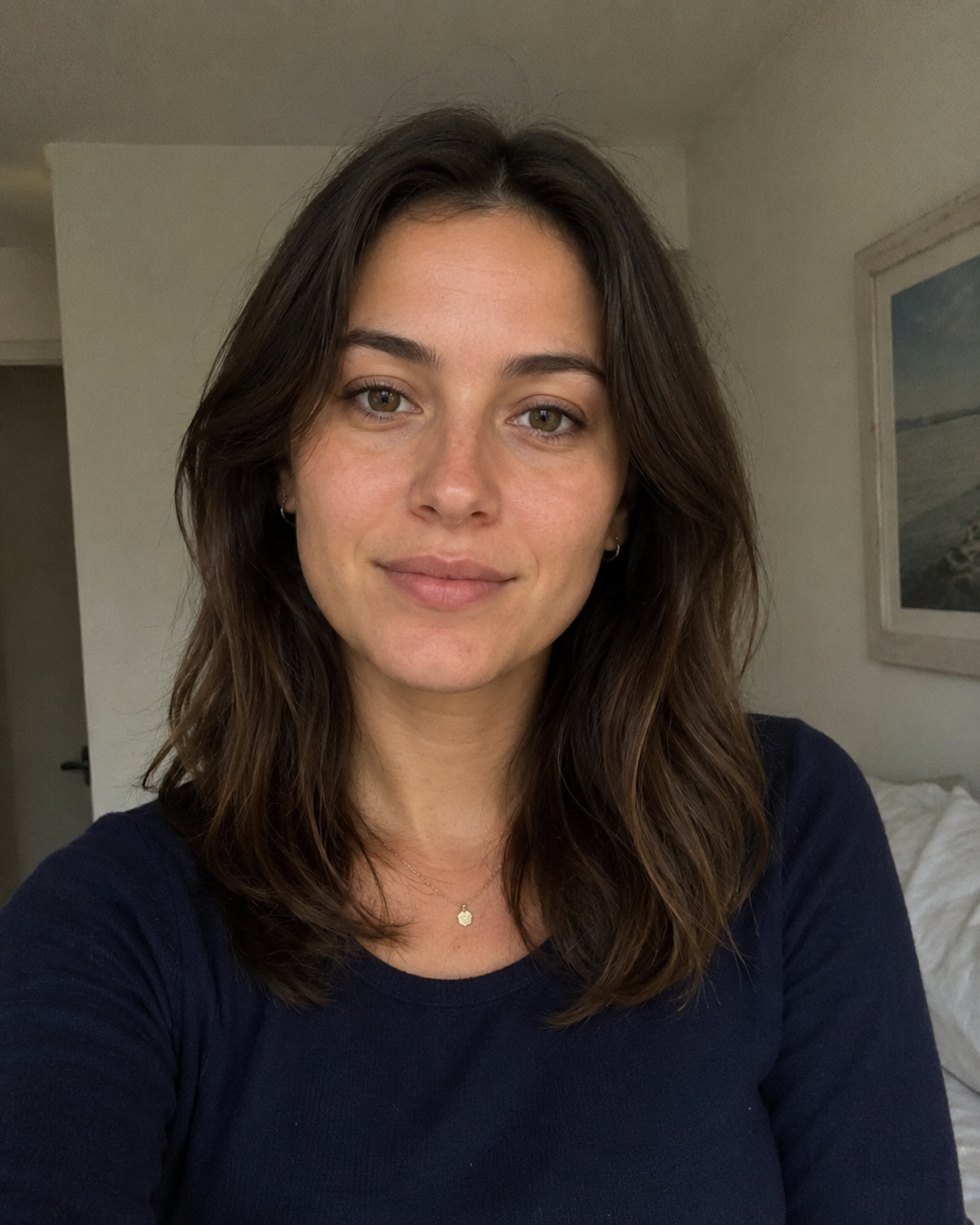
Is this a real representation of an average woman?
.
Recently, I decided to put AI to the test.
I asked ChatGPT and Canva to generate an image of an "average woman."
The result was striking.
The woman it created (seen above) had a slim body, flawless skin, large eyes, perfectly shaped eyebrows and conventionally attractive features. She looked more like a model than someone you might pass in the supermarket, on the school run or in your local coffee shop.
So I ask you to take a moment as ask yourself: is this really an average representation of women in today's society?
The evidence suggests not.
According to the UK Office for National Statistics (ONS), the median age of women in the UK is approximately 42 years. Yet the image generated looked closer to a woman in her twenties.
Similarly, the SizeUK survey, one of the largest body measurement studies ever conducted in the UK, found that the average UK woman wears around a size 16 (Sizemic, 2007). The woman generated by AI appeared much closer to a size 10.
This made me curious. How had AI decided that this was what an "average woman" looks like?
So I asked.
The response was surprisingly revealing.
AI image generators are trained on vast amounts of online data. They learn from statistical patterns in the images they encounter and use those patterns to generate new ones. In simple terms, they learn what "women" tend to look like based on the images available on the internet.
And that's where the problem begins.
The Internet Is Not Real Life
If AI is learning from images online, it is learning from a world already saturated with filters, editing, carefully selected photographs and beauty ideals.
When asked to create an "average woman," AI doesn't necessarily generate a statistically average woman. Instead, it often generates a woman who reflects the dominant beauty standards present in its data.
In other words, AI may be reproducing what society thinks is desirable rather than what is actually typical.
This concern is explored in the 2025 paper The Thinness of GenAI: Body Size in Relation to the Construction of the Normate Through GenAI Image Models. The authors argue that AI-generated images may reinforce narrow body ideals by repeatedly presenting thin, conventionally attractive bodies as the default representation of women.
The paper suggests that repeated exposure to these images can:
Reinforce unrealistic beauty standards
Shift perceptions of what is considered "normal"
Increase appearance-based social comparison
Contribute to body dissatisfaction
Why This Matters for Eating Disorders
Body image researchers have long described a phenomenon known as normative discontent.. This refers to the idea that dissatisfaction with one's body becomes so common that it is viewed as normal.
If people are repeatedly exposed to images that present youth, thinness and conventional attractiveness as the default, they may begin to view those characteristics as normal and expected. The more this happens, the greater the gap between real bodies and perceived "normal" bodies.
For individuals vulnerable to disordered eating, this creates yet another source of comparison and self-criticism.
A Helpful Reminder
There is another important lesson here.
If an AI model learns what an "average woman" looks like from images online and produces someone who is younger, slimmer and more conventionally attractive than the average woman in reality, what does that tell us about the content we consume every day?
Perhaps it reminds us that much of what we see online is not an accurate reflection of the real world. It is a curated collection of images designed for engagement, not reality.
And if we spend our time comparing ourselves to those images, we are comparing ourselves to a distorted version of reality.
What Can We Do?
We may not be able to stop AI-generated images from becoming more common, but we can become more critical consumers of them.
A few simple strategies can help:
Curate your social media feed and unfollow accounts that make you feel inadequate.
Take regular breaks from screens and social media.
Seek out diverse representations of age, shape and size.
Remind yourself that online images are often curated, edited or entirely generated by AI.
Spend more time engaging with real people in the real world.
Because ultimately, not everything that glitters online is gold.
And perhaps the most important thing to remember is this:
AI-generated images increase our biases and comparisons, putting extra pressure on us that frankly, we just don’t need.