
Mindful eating is a topic that has been around the nutrition world for a while, but is it useful as a tool to support eating disorders?
Let’s explore whether becoming more aware of how you eat, rather than focusing purely on what you eat, could help improve your relationship with food.
In this blog we will explore what mindful eating actually is, the research around mindful eating and eating disorders, why it may be beneficial and when it can be taken too far.
First, what does the actual research say?
Let’s take a look.

.
Is There a Link Between Mindful Eating and Disordered Eating?
Research suggests there could be a connection.
One study looking at athletes found something quite interesting: people who showed more disordered eating behaviours tended to have lower levels of mindful eating. In other words, the less mindful someone was around eating, the more likely they were to experience disordered eating patterns.
That’s particularly relevant in athlete populations, where things like body image pressure, performance expectations, control around food and perfectionism can all run quite high.
What this seems to point towards is that mindfulness around eating might act as a kind of protective factor by helping people to stay more connected to hunger, fullness and emotional cues.
Other studies on the subject suggest that mindful eating can be supportive when used as part of a broader therapeutic framework, particularly if you struggle with binge eating, emotional eating, bulimia nervosa and night time eating.
What Is Mindful Eating Anyway?
At its core, mindful eating is about bringing a little more awareness and presence to the eating experience.
That might look like:
slowing down slightly while eating (can you put your knife and fork down between bites?)
really noticing flavours, textures, and smells
checking in with hunger or fullness levels (more on that later)
becoming aware of emotions or urges around food
eating with fewer distractions where possible
Importantly, this is not about judgment. The goal isn’t to criticise yourself for what or how you eat. It’s simply about noticing the food in front of you.
How Does It Help? (the science).
Before we even take a bite, the body has already started preparing for food. Simply seeing, smelling or anticipating food activates what’s known as the cephalic phase response. This is essentially the brain and digestive system communicating in advance of eating.
During this phase, saliva production increases, stomach acid begins to rise and digestive enzymes start preparing the body to break food down more efficiently. Blood flow to the digestive organs also increases, helping prime the digestive system for what’s coming next.
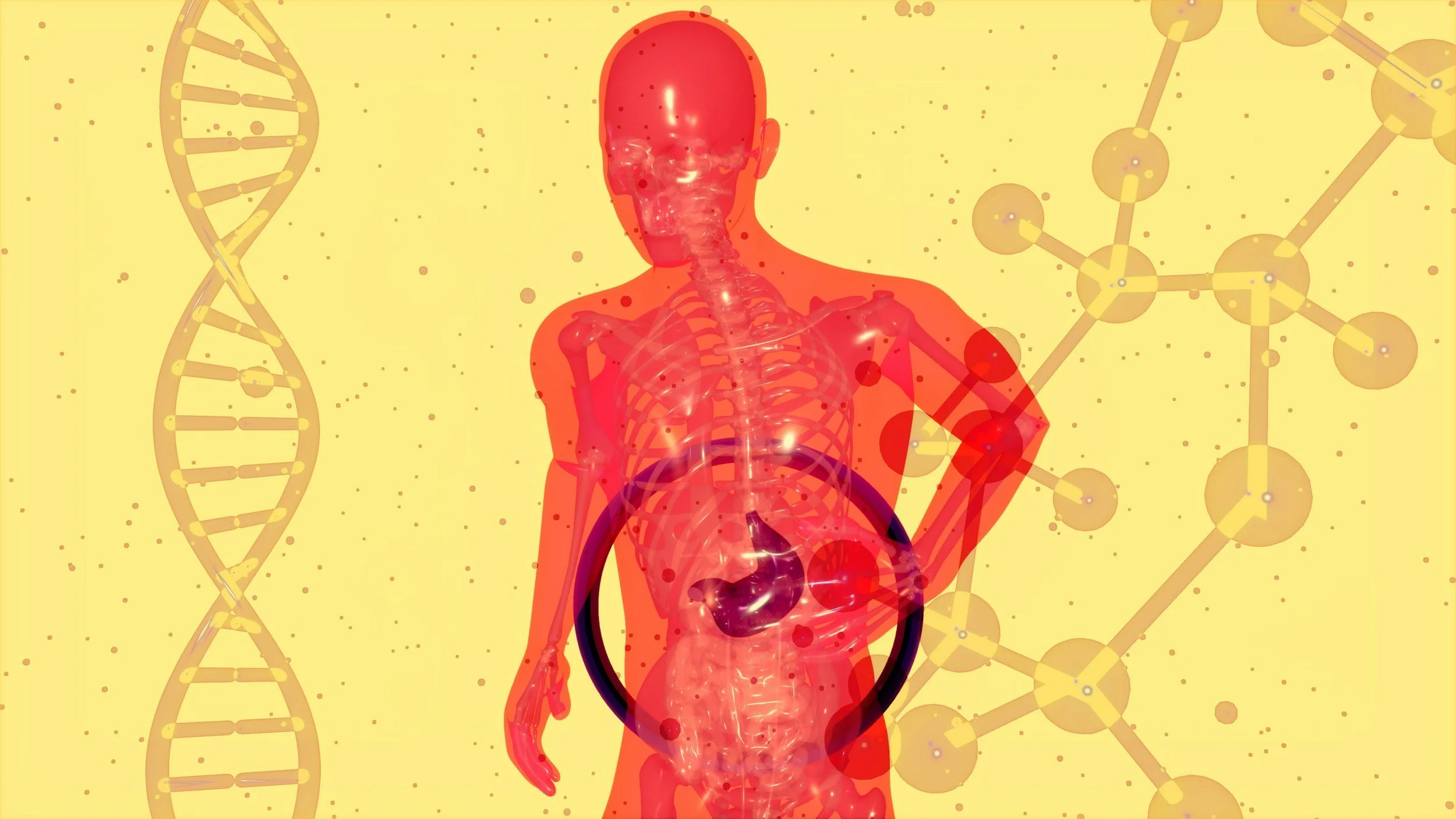
When we eat distracted, rushed, or disconnected from the experience, this response may be less pronounced. Mindful eating encourages us to slow down, notice the food, engage the senses and become more present during meals, all of which may help strengthen this digestive “preparation” process.
Eating more slowly also gives the body more time to release and respond to the hormones involved in fullness and satisfaction. Hormones such as CCK, GLP-1, and peptide YY help signal satiety to the brain, while ghrelin, often referred to as the hunger hormone,begins to reduce after eating.
These signals are not immediate. It takes 20 minutes for the gut and brain to communicate effectively, which is one reason fast eating can sometimes lead to overeating before fullness has properly registered.
This doesn’t mean mindful eating is a perfect solution. Appetite, fullness and eating behaviours are influenced by many factors including stress, emotions, neurobiology and environment. But physiologically, mindful eating may help create conditions that allow the body’s natural digestion and satiety systems to work a little more effectively.
Is Mindful Eating Suitable for Everyone?
For some people, especially those with restrictive eating disorders or those early in recovery, slowing down eating is not appropriate. Food can often feel overwhelming leading to extended meal times. In this case mindful eating would rely more on trying to reduce the time taken to eat and focusing on nervous system regulation rather than slowing down.
Final Thoughts
Overall, the research suggests that mindful eating can be a really supportive approach, particularly for people experiencing:
binge eating
emotional eating
compulsive eating
Of course, this is not the complete answer to any eating challenge and seeking professional support is still essential. Slowing down and reconnecting with the body, however, can definitely be another tool for your toolbox.
References -
Minari, T. P., de Araújo-Filho, G. M., Tácito, L. H. B., Yugar, L. B. T., Rubio, T. de A., Pires, A. C., Vilela-Martin, J. F., Cosenso-Martin, L. N., Fattori, A., Yugar-Toledo, J. C., & Moreno, H. (2024). Effects of Mindful Eating in Patients with Obesity and Binge Eating Disorder. Nutrients, 16(6). https://doi.org/10.3390/NU16060884
Özlevent, E. İ., & Devrim-Lanpir, A. (2026). Disordered eating predicts mindful eating regardless of sex and disability status: a cross-sectional study. Journal of Eating Disorders 2026. https://doi.org/10.1186/S40337-026-01569-Y
Tapper, K. (2022). Mindful eating: what we know so far. Nutrition Bulletin, 47(2), 168–185. https://doi.org/10.1111/NBU.12559